
Superlative Template
Superlative Template - A superlative is the form of an adjective or adverb used to compare three or more things. Superlative adjectives denote the highest degree of comparison. The superlative degree denotes what is “the. How to use superlative in. Learn about comparative and superlative adjectives and do the exercises to practise using them. In other words, a superlative shows that. Highest, lowest, deepest, farthest, etc) extent or degree of something. The meaning of superlative is of, relating to, or constituting the degree of grammatical comparison that denotes an extreme or unsurpassed level or extent. A superlative is a degree of comparison used to describe the quality or quantity of something in comparison with others. In this guide, we explain all the basics about superlative adjectives, including spelling rules, when to use most, and even an explanation of comparative versus superlative. Superlative (plural superlatives) the extreme (e.g. The form of an adjective or adverb that expresses that the thing or person being described has…. A superlative is the form of an adjective or adverb used to compare three or more things. The meaning of superlative is of, relating to, or constituting the degree of grammatical comparison that denotes an extreme or unsurpassed level or extent. A superlative is a degree of comparison used to describe the quality or quantity of something in comparison with others. For example, 'sweetest' is the superlative form of 'sweet,' and 'quickest' is the superlative form of. In this guide, we explain all the basics about superlative adjectives, including spelling rules, when to use most, and even an explanation of comparative versus superlative. The superlative degree denotes what is “the. We use superlatives—such as fluffiest and best —when we want to say something has the highest degree of a quality compared to all others, as in “we adopted the fluffiest cat at the. Highest, lowest, deepest, farthest, etc) extent or degree of something. The form of an adjective or adverb that expresses that the thing or person being described has…. A superlative is the form of an adjective or adverb used to compare three or more things. A superlative is a degree of comparison used to describe the quality or quantity of something in comparison with others. We use superlatives—such as fluffiest and. The form of an adjective or adverb that expresses that the thing or person being described has…. Acme, apex, height, peak, zenith The meaning of superlative is of, relating to, or constituting the degree of grammatical comparison that denotes an extreme or unsurpassed level or extent. How to use superlative in. In other words, a superlative shows that. Highest, lowest, deepest, farthest, etc) extent or degree of something. Acme, apex, height, peak, zenith How to use superlative in. The meaning of superlative is of, relating to, or constituting the degree of grammatical comparison that denotes an extreme or unsurpassed level or extent. Superlatives are words we use to show that something has the highest or lowest degree of. A superlative is the form of an adjective or adverb used to compare three or more things. In this guide, we explain all the basics about superlative adjectives, including spelling rules, when to use most, and even an explanation of comparative versus superlative. In other words, a superlative shows that. How to use superlative in. The form of an adjective. The form of an adjective or adverb that expresses that the thing or person being described has…. A superlative is the form of an adjective or adverb used to compare three or more things. Superlative adjectives denote the highest degree of comparison. A superlative is a degree of comparison used to describe the quality or quantity of something in comparison. Superlatives are words we use to show that something has the highest or lowest degree of a quality when comparing three or more things. Highest, lowest, deepest, farthest, etc) extent or degree of something. How to use superlative in. The superlative degree denotes what is “the. The form of an adjective or adverb that expresses that the thing or person. How to use superlative in. Learn about comparative and superlative adjectives and do the exercises to practise using them. The superlative degree denotes what is “the. Superlatives are words we use to show that something has the highest or lowest degree of a quality when comparing three or more things. Superlative adjectives denote the highest degree of comparison. Learn about comparative and superlative adjectives and do the exercises to practise using them. In other words, a superlative shows that. The superlative degree denotes what is “the. Superlative (plural superlatives) the extreme (e.g. Superlatives are words we use to show that something has the highest or lowest degree of a quality when comparing three or more things. Superlatives are words we use to show that something has the highest or lowest degree of a quality when comparing three or more things. The meaning of superlative is of, relating to, or constituting the degree of grammatical comparison that denotes an extreme or unsurpassed level or extent. In other words, a superlative shows that. The form of an adjective. The form of an adjective or adverb that expresses that the thing or person being described has…. Highest, lowest, deepest, farthest, etc) extent or degree of something. For example, 'sweetest' is the superlative form of 'sweet,' and 'quickest' is the superlative form of. In other words, a superlative shows that. Superlative (plural superlatives) the extreme (e.g. Acme, apex, height, peak, zenith In other words, a superlative shows that. A superlative is the form of an adjective or adverb used to compare three or more things. Superlative adjectives denote the highest degree of comparison. For example, 'sweetest' is the superlative form of 'sweet,' and 'quickest' is the superlative form of. The form of an adjective or adverb that expresses that the thing or person being described has…. The superlative degree denotes what is “the. Superlatives are words we use to show that something has the highest or lowest degree of a quality when comparing three or more things. Learn about comparative and superlative adjectives and do the exercises to practise using them. We use superlatives—such as fluffiest and best —when we want to say something has the highest degree of a quality compared to all others, as in “we adopted the fluffiest cat at the. Highest, lowest, deepest, farthest, etc) extent or degree of something. How to use superlative in.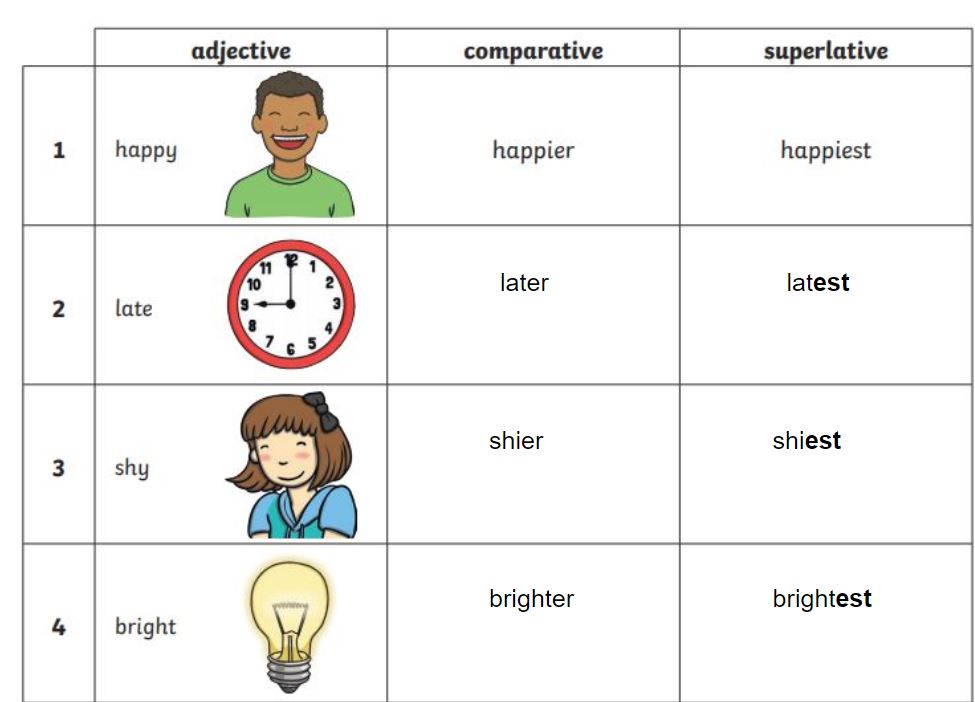
What is a Superlative? Twinkl Teaching Wiki Twinkl
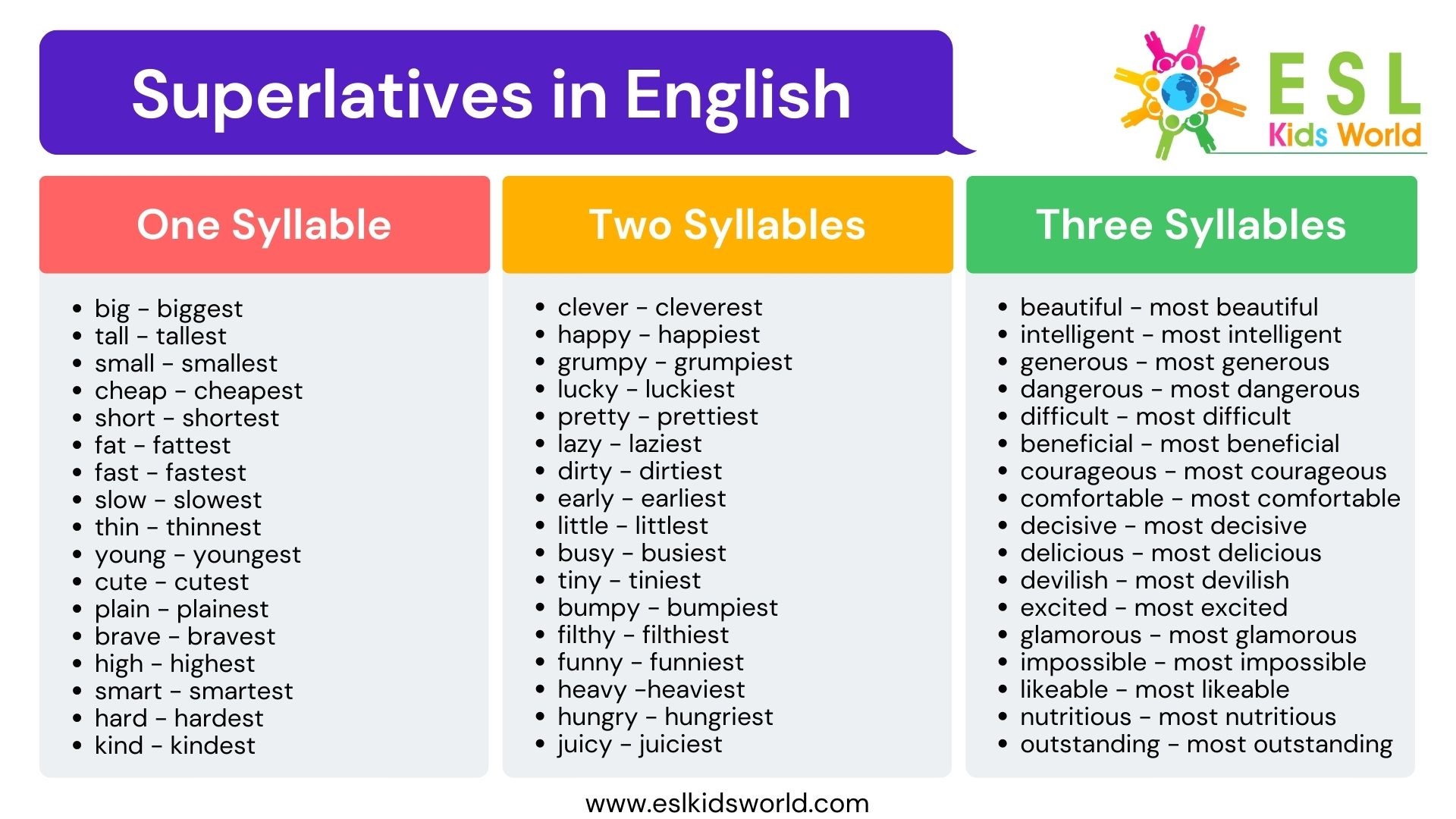
Superlatives Examples What is a Superlative? ESL Kids World
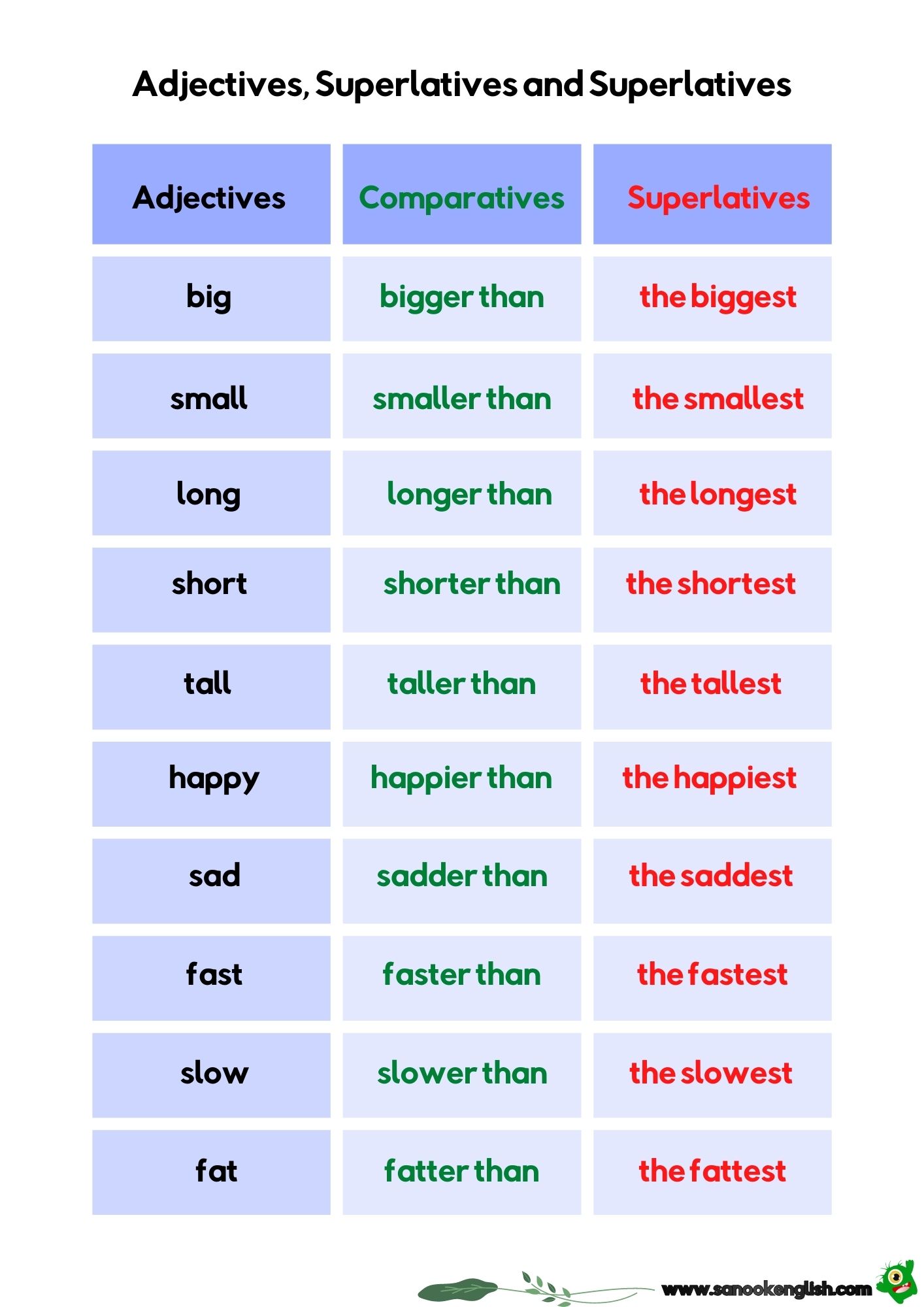
Adjectives Comparatives and Superlatives Fun ESL Learning

Comparative Superlative Adjectives Adverbs
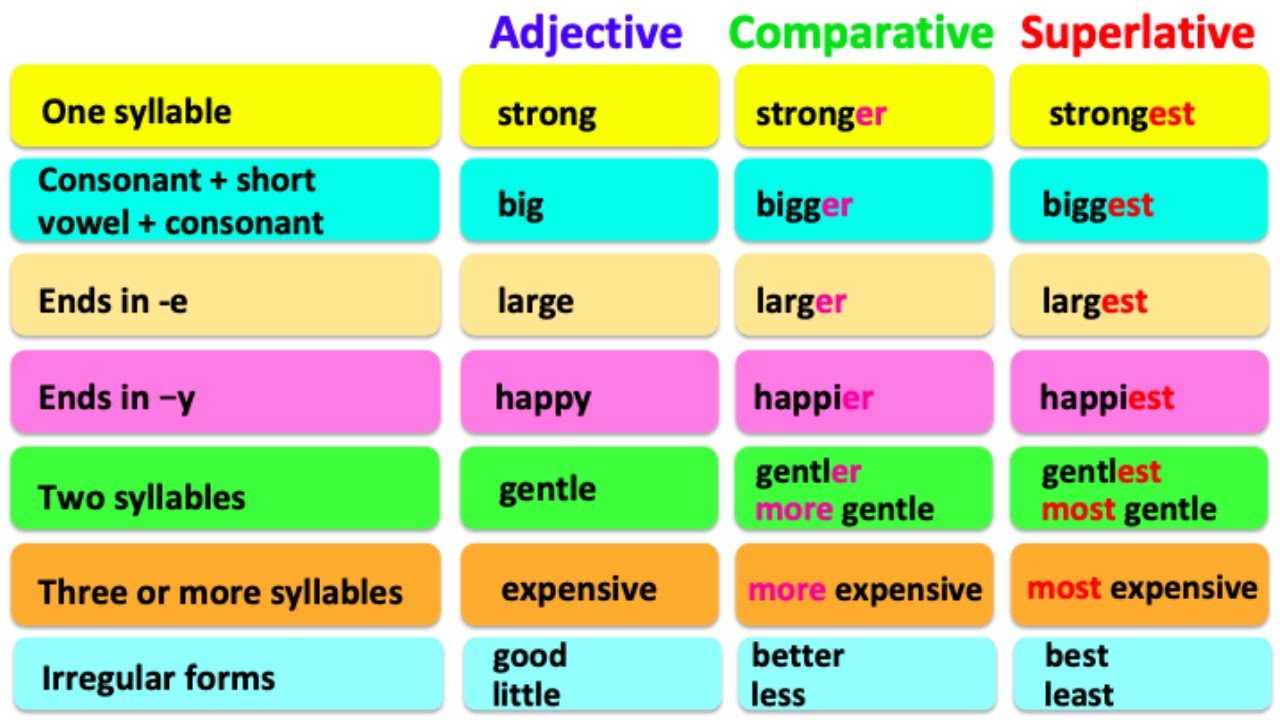
COMPARATIVE & SUPERLATIVE ADJECTIVES 🤔 English grammar Learn the
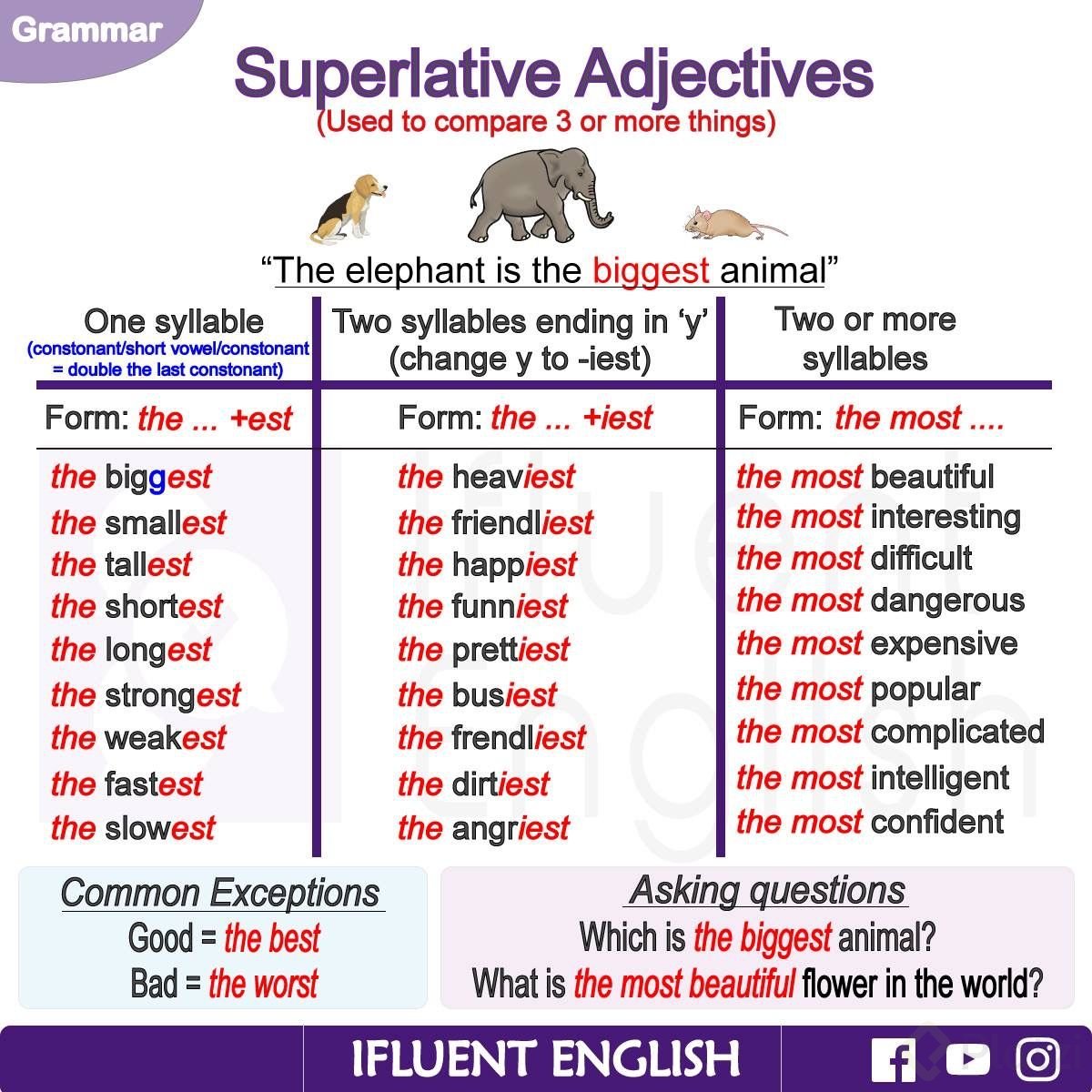
Grammar Comparative and superlative adjectives (better, worse
What Are Superlative Adjectives? Definition and Examples Grammarly
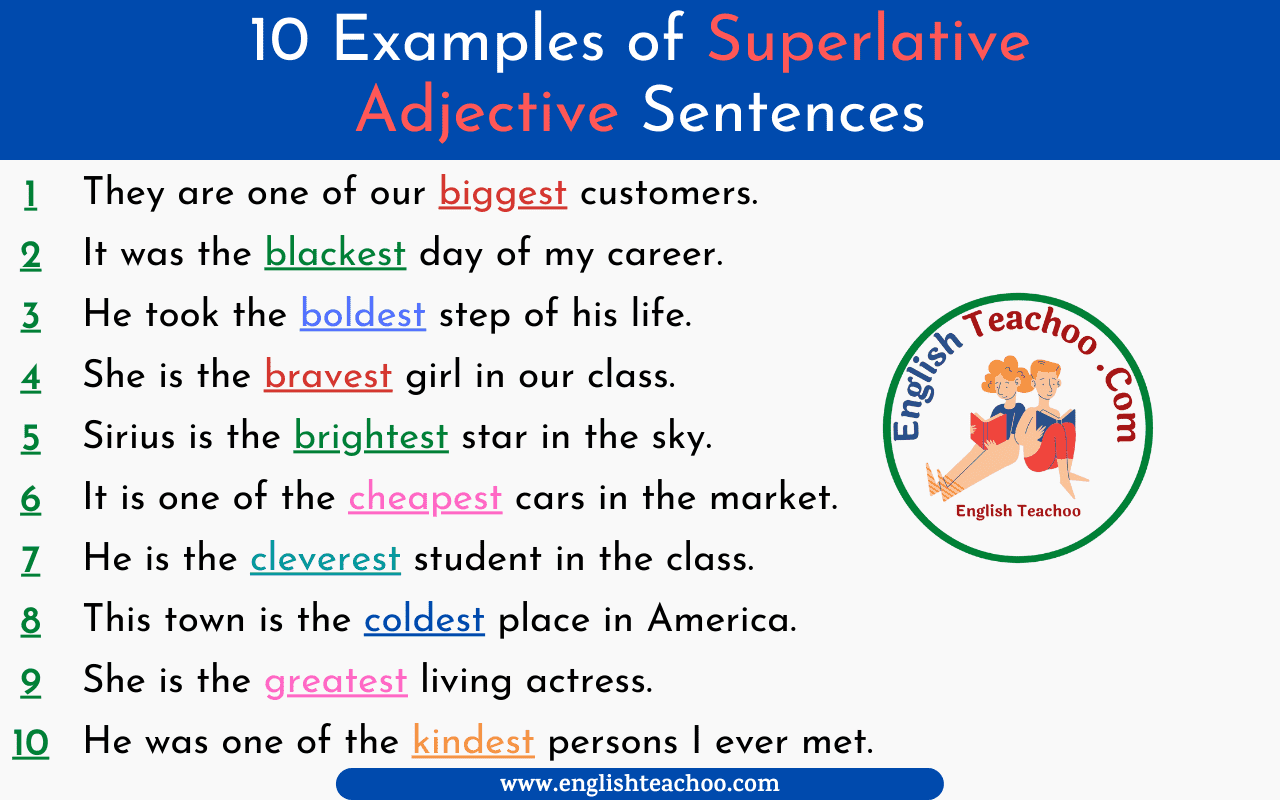
10 Examples of Superlative Adjective Sentences EnglishTeachoo
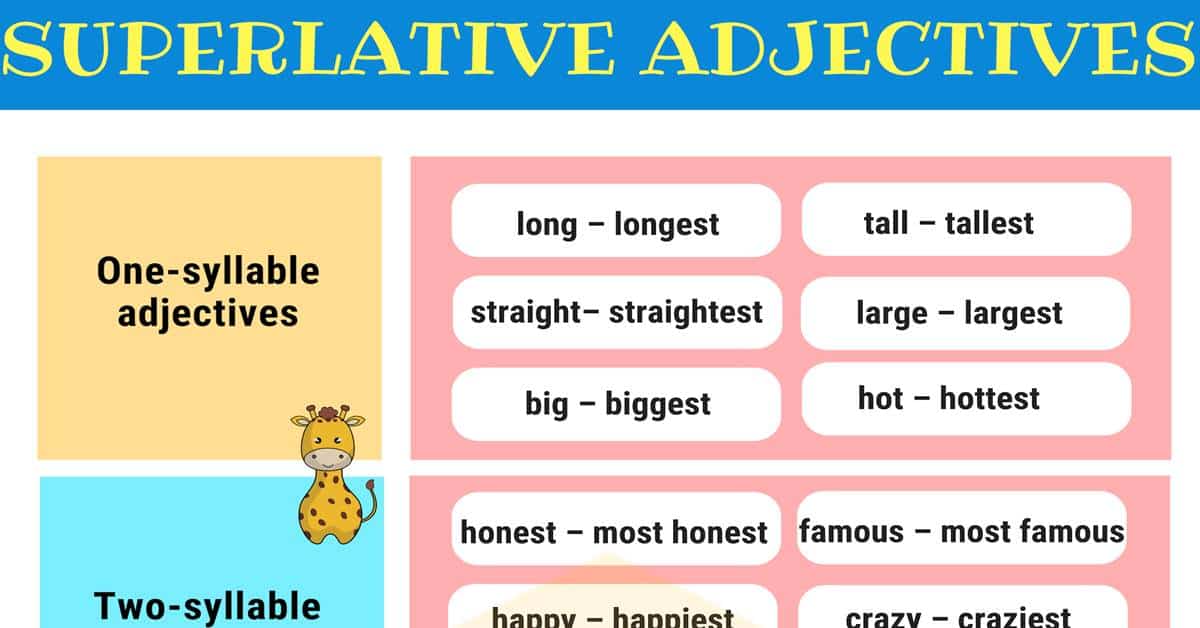
Comparative and superlative adjectives Mind Map

Comparative superlative adjectives and examples Artofit
The Meaning Of Superlative Is Of, Relating To, Or Constituting The Degree Of Grammatical Comparison That Denotes An Extreme Or Unsurpassed Level Or Extent.
Superlative (Plural Superlatives) The Extreme (E.g.
In This Guide, We Explain All The Basics About Superlative Adjectives, Including Spelling Rules, When To Use Most, And Even An Explanation Of Comparative Versus Superlative.
A Superlative Is A Degree Of Comparison Used To Describe The Quality Or Quantity Of Something In Comparison With Others.
Related Post: